Image circa 1908
140 Years of Service to the Crown & Colours
The Royal Military Police Mounted Troop/Section, was originally formed as the Military Mounted Police in 1855. Although not officially enrolled as an independent corps within the British Army until 1877, this was the beginning of the modern corps which also included the formation of the Military Foot Police in 1885.
The Mounted Troop/Section went through many changes throughout its history until its final disbandment in 1995.
Formative Dates
1855
Formation of Military Mounted Police
1877
Corps of Military Mounted Police Gazetted
1950
Re-Formation of Corps of Royal Military Police Mounted Troop UK
1995
Disbandment of Corps of Royal Military Police Mounted Troop
The Beginning
1855-
WWI
1914-
After WWI
1919-
WWII
1939-
After WWII
1946-
Menu
Menu
Synopsis
This website is here to provide an historic archive of a very small unit within the British Army. It is here to tell the story of the members of the unit, but most importantly, the story of what were, the last working full time duty horses of the British Army.
The formation of this unit led to the larger formation of the Corps Royal Military Police, often known as the smallest Corps with the biggest load, both in peacetime and wartime.
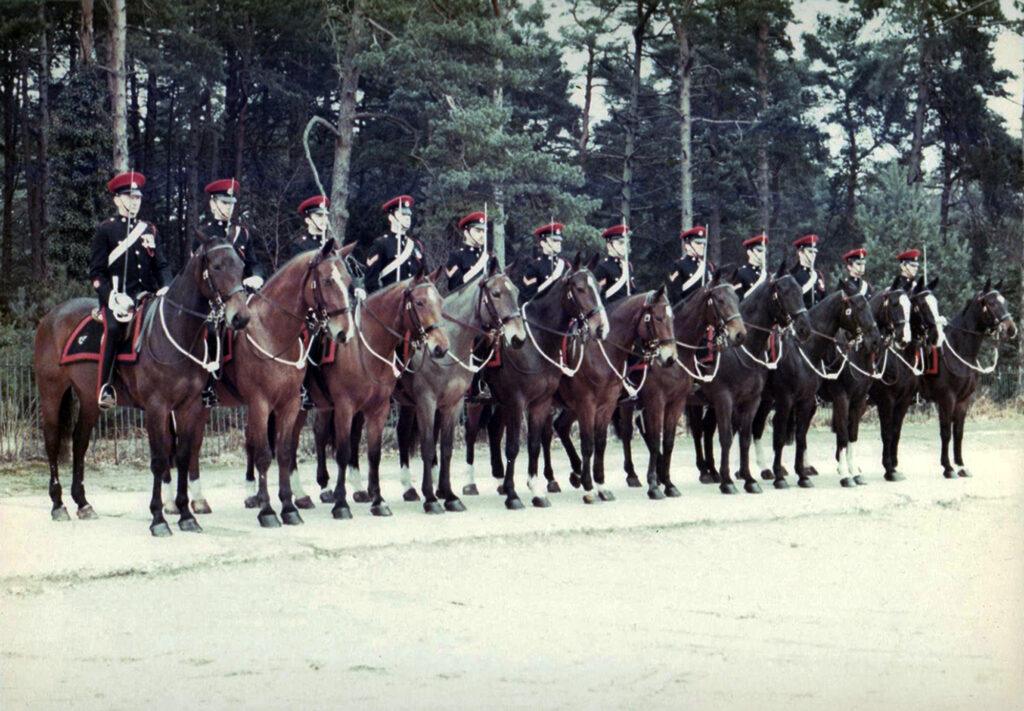
The Royal military police Mounted Troop, was a purely voluntary unit within the Corps of Royal Military Police, and the dedication of both horses and riders was immense. It was not unusual in the very busy times for both horses and riders to be out of stables up to 16 hours per day performing all types of duties, from Policing, Search & Rescue, Crowd Control, Sporting Events, Concerts to Ceremonial, often going directly from one to another with just a small break in between.
From the end of March until the beginning of October each year, half of the Troop would be employed on the Display Team. Traveling the country to boost recruitment for the Corps, and entertain the crowds of thousands annually with displays of skill with Sword, Lance & Revolver, from horseback, along with the Motorcycle volunteers from other RMP units worldwide.
Royal Military Police Mounted Troop – A Glimpse into the Early Roots of Military Law Enforcement
The origins of organized law‑enforcement in England can be traced back to the Anglo‑Saxon era, a time when the foundations of today’s Royal Military Police Mounted Troop were being quietly laid. Although the exact title “Provost Marshal” did not exist then, the duties performed by early officials closely resemble those of modern mounted police units.
Historical Context
During the Anglo‑Saxon period, the term Provost referred to a local authority tasked with maintaining order and enforcing the king’s law. These early Provosts acted much like today’s Royal Military Police Mounted Troop, patrolling communities, overseeing justice, and ensuring peace.
_____________________________
Role and Function
Law‑Enforcement Duties – Much like the contemporary mounted troops of the Royal Military Police, Anglo‑Saxon provosts supervised local sheriffs, monitored compliance with statutes, and intervened when disorder threatened public safety.
Military Oversight – In wartime, these officials commanded troops and upheld discipline, mirroring the dual civilian‑military responsibilities of the modern Royal Military Police Mounted Troop.
_____________________________
Evolution of the Title
While the formal designation “Provost Marshal” emerged centuries later within the British Army, its conceptual predecessor existed in the Anglo‑Saxon system. Over time, the role matured, eventually giving rise to the structured, highly trained Royal Military Police Mounted Troop we recognize today—a unit renowned for its mobility, ceremonial presence, and specialist policing capabilities.
_____________________________
Key Takeaway
Anglo‑Saxon England may not have featured a “Provost Marshal” as we know it, but the essential functions of law enforcement and military discipline were already in place. Those early responsibilities set the stage for the evolution of the Royal Military Police Mounted Troop, a distinguished force that continues to blend tradition with modern policing excellence.
_____________________________
What Is a Provost Marshal?
The Provost Marshal is one of the longest‑standing Crown appointments in Britain, essentially the senior officer responsible for military discipline and law‑enforcement within the armed forces. The role predates modern policing and can be traced back to the medieval period, making it a foundational element of today’s Royal Military Police Mounted Troop (to March 1995) and the Foot Police.
_____________________________
Medieval Foundations
Norman Era (11th‑12th c.) – The earliest recorded Provost Marshals served as junior officers to the Earl Marshal inside the Court of Chivalry. Their chief duty was to uphold the “King’s Peace” among feudal levies, a mandate that required direct royal appointment because loyalty to the sovereign was paramount.
Geographic Jurisdiction – Although a military post, the marshal’s authority extended to civilians living within a twelve‑mile radius of the monarch’s entourage, allowing swift action against any breach of order, irrespective of social rank.
_____________________________
Expansion Under the Tudors and Elizabeth I
County‑wide Deployment – By Queen Elizabeth I’s reign, Provost Marshals were stationed in each shire to curb lawlessness caused by demobilised soldiers and to protect public safety during crises such as the Spanish Armada (1588). They escorted militia formations and punished rumor‑mongers who threatened national morale.
Battlefield Policing – In the early 14th century the marshal’s duties evolved into recognizable military policing. They accompanied Edward III’s armies at Crécy (1346) and Agincourt (1415), where early versions of camp police helped maintain order among troops and civilians alike.
_____________________________
Formalisation in the Sixteenth Century
Sir Henry Guildford (1511) – The first clearly documented Provost Marshal, appointed by Henry VIII.
Articles of War (1513) – These regulations codified the marshal’s responsibilities, placing discipline at the core of the role and introducing the term “Provost Company.”
Expanded Staff (by 1537) – The marshal oversaw a mixed team of legal officers, guards, gaolers, and mounted troops, laying the groundwork for a dedicated Provost Service.
_____________________________
Civil Wars and the Birth of a Standing Army
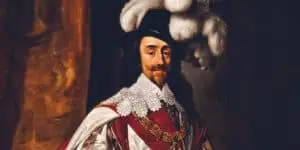
English Civil Wars (1642‑1651) – Both Royalist and Parliamentarian forces employed Provost Marshals. King Charles I upgraded the title to Provost Marshal General, a designation that survived until 1829.
Restoration (1660) – The creation of a permanent Standing Army cemented the Provost function as an integral military department. In 1685 the Provost Marshal General became a permanent peacetime post, with marshals attached to divisions, garrisons, and individual regiments.
_____________________________
Napoleonic Era and the Staff Corps of Cavalry
Duke of Wellington’s Reforms – Detailed orders during the Peninsular War (1808‑1814) professionalised Provost duties. The men earned the nickname “Bloody Provosts” for their rigorous enforcement of discipline in a notoriously unruly army.
Staff Corps of Cavalry (1810‑1819) – Raised by Wellington under Brevet Lt‑Col George Scovell, this volunteer cavalry unit performed primary policing tasks throughout the Iberian campaign, was briefly disbanded after 1814, re‑formed after Waterloo, and finally stood down in 1819.
_____________________________
Crimean War Contributions
Mounted Staff Corps (1853‑1856) – Drawn from the Irish Constabulary and the Metropolitan Police, this formation provided battlefield policing and crowd control during the Crimean conflict, illustrating the increasing reliance on civilian‑trained law‑enforcement personnel.
_____________________________
The Official Birth of the Military Police
War Office Circular (13 June 1855) – Ordered the creation of a Corps of Military Mounted Police at Aldershot, the first official use of the word “Police” within the British Army.
Initial Strength – Twenty‑one cavalry NCO’s were tasked with camp discipline and civilian protection.
Military Mounted Police (MMP, 1877) – Became an independent corps with its own pay scale, promotion path, and record‑keeping.
_____________________________
Expansion to Foot Policing
Military Foot Police (MFP, 1882) – Formed for service in Egypt, mainly recruiting former Metropolitan Police officers. The MFP was made permanent in 1885, complementing the mounted element and extending policing capability to infantry formations.
_____________________________
Late‑19th‑Century Growth
By the 1890s the combined Military Police numbered over 300 men, with detachments stationed across the United Kingdom and in overseas colonies such as Egypt, Sudan, and South Africa. Their reputation was forged during the Second Anglo‑Boer War (1899‑1902), where they handled traffic control, prisoner of war management, and civil‑order duties.
_____________________________
World War I – Rapid Expansion
Pre‑war Strength – ~500 personnel.
1918 Strength – >25,000, including specialised branches: traffic control, dock police, and the Special Investigation Branch (SIB).
Key Engagement – The Battle of Neuve Chapelle (1915) showcased how coordinated provost actions improved battlefield logistics, prisoner handling, and overall combat effectiveness.
_____________________________
Inter‑War Consolidation
Corps of Military Police (CMP, 1926) – Merger of MMP and MFP created a unified body.
Global Presence – Deployments to Shanghai, the Saar, Palestine, Hong Kong, Singapore, Egypt, and Malta.
Recruitment Standards – Emphasised high moral character, literacy, and physical fitness; from 1938 civilians could enlist directly.
_____________________________
World War II – Massive Mobilisation
1939 Mobilisation – Small peacetime cadre rapidly expanded via reservist recall and recruitment from civilian police forces.
War‑time Strength – >50,000 personnel across six major branches, including airborne provost units and an enlarged SIB.
Operational Highlights – Served in every major theatre: Dunkirk, North Africa, Italy, Normandy, Arnhem, and the final push into Germany.
Honours – Hundreds of gallantry awards and nearly a thousand names on the Second World War Roll of Honour.
_____________________________
Royal Designation
1946 – King George VI awarded the “Royal” prefix in recognition of extraordinary wartime service, formally establishing the Royal Military Police (RMP).
_____________________________
Post‑War Operations & Modern Role
1957: Corps Motto – (source RMP Museum)
In late November 1957, the freshly convened Corps Committee gathered for its second session. Shortly afterward, the RMP Journal invited readers to propose a concise, five‑word (or fewer) motto for the Corps, offering a prize of £3 guineas (equivalent to roughly £72.45 in 2018). Submissions were due by 1 August 1958.
Major R. W. Payne, who was then Deputy‑Assistant‑Provost Marshal at Headquarters London District, entered the competition and his suggestion was selected as the winner.
On 9 October 1959, the Provost Marshal (Army), Brigadier P. H. Richardson DSO, OBE, announced in the fourth‑quarter issue of that year’s RMP Journal that Her Majesty The Queen had graciously authorized the Corps of the Royal Military Police to adopt the motto “Exemplo Ducemus,” literally rendered as “By example we lead.” The adoption was formalised in Army Order 73 of 1959.
Brigadier Richardson explained that the motto was intended to remind all members of the Royal Military Police of their core purpose and spirit, providing an aspirational standard for the Corps to uphold.
__________
Cold‑War & Decolonisation – RMP units operated in Germany, Palestine, Korea, Cyprus, and Northern Ireland, adapting to both conventional and counter‑insurgency environments.
Late‑20th‑Century Conflicts – Played pivotal roles in the Falklands (1982), Gulf War (1990‑91), Balkan peace‑keeping, Sierra Leone, Iraq, and Afghanistan.
Disbandment – The Mounted Troop was stood down from all operational duties and disbanded in March 1995 after 140 years of service to the Crown and Colours.
Core Capabilities Today –
Law Enforcement & Criminal Investigations – Including cyber‑crime and serious violent offences.
Close Protection – Providing personal security for senior military and diplomatic figures.
Battlefield Policing & Traffic Management – Ensuring safe movement of troops and materiel in combat zones.
Special Investigation Branch (SIB) – Conducts complex investigations ranging from fraud to homicide.
Training & Doctrine – RMP runs the Defence School of Policing and Guarding, delivering the UK’s premier military policing curriculum.